SpaceX Launches 40 Satellites For OneWeb At Sunset!
- Josh G
- Dec 8, 2022
- 3 min read

Written By: Josh G for Onkla
Following many delays, the SpaceX Falcon 9 rocket lifted off from historic Launch Complex 39A at the Kennedy Space Center in Florida. Following the launch, the booster then returned and landed back at Landing Zone 1 at the Cape Canaveral Space Force Station in Florida. The upper stage of the Falcon 9 launch vehicle successfully deployed fourty OneWeb satellites into a polar orbit.
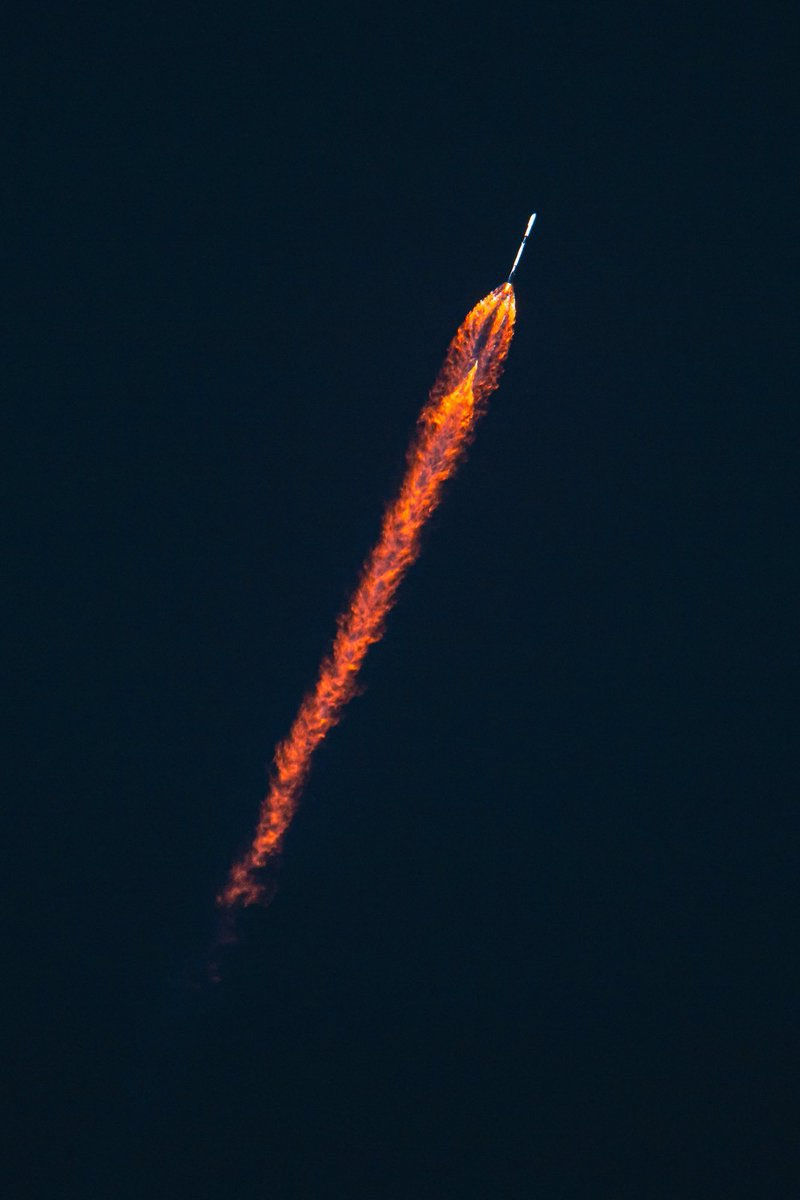
Photo: John Kraus - Falcon 9 Ascending into the Evening Sky
The first stage booster, B1069, flew for its first time tonight. This booster made its debut flight back in December of last year, where it launched the Cargo Dragon spacecraft for the CRS-24 mission to the International Space Station. The booster came back to port with severe damage on the four landing legs, aswell as on the engines nozzles. However, after many months of repair, booster B1069 was ready to fly again. This rocket flew on Starlink 4-23 in late August, which is around eight months after its previous flight. The booster successfully made its landing on SpaceX’s Automomous Spaceport Droneship, “A Shortfall Of Gravitas.” Following its return, the booster was refurbished to fly once again for the during the late night Hotbird 13F mission. The booster made a successful ascent, which was then followed by a successful landing on the droneship, “Just Read The Instructions.” Now after a couple weeks of inspections and refurbishment, the booster was now ready to fly for the fourth time.
This flight is the 15th flight of a launch dedicated to launching OneWeb satellites. The Falcon 9 carries 40 satellites inside of its payload fairing during this mission. The initial constellation of OneWeb satellites consists of 648 satellites in orbit. This mission was previously set to launch on a Russian Soyuz rocket. However, since there is a current conflict in the country, all OneWeb launches have been moved over to SpaceX Falcon 9’s.

Credit: OneWeb on Twitter - Stack of 40 OneWeb Satellites In Payload Fairing
Propellant load began on time, and following around a 35 minute propellant load sequence, the Falcon 9 rocket was go for launch. Seconds later, the vehicle lifted off from Launch Complex 39A at the Kennedy Space Center in Florida. The rocket lit up the evening sky, sending a loud thunderous rumble across the Kennedy Space Center as its nine Merlin engines powered the vehicle with 1.8 million pounds of thrust into the sky. Around two minutes into the flight, the first stage cutoff in an event known as Main Engine Cutoff. The stages separated, and the second stage Merlin Vacuum engine ignited. The first stage performed a flip and ignited a single Merlin engine to boost the Falcon 9 rocket booster back to the Cape for a propulsive landing on Landing Zone 1. The two fairing halves successfully separated, which was now exposing the 40 OneWeb satellites to the vacuum of space.
The first stage entry burn began at around six minutes into the flight, and lasted around twenty seconds. This burn consisted of three of the nine Merlin 1D engines on the first stage of Falcon 9. This burn creates a force field around the booster with the soot emitted from the engine, while travelling around six times the speed of sound.

Photo: Trevor Mahlmann - Falcon 9 Landing on LZ-1 behind the Terran 1 rocket
The landing burn started, the landing legs deployed, and the first stage successfully landed on Landing Zone 1. Triple sonic booms rang throughout the Cape Canaveral Space Force Station and the Kennedy Space Center, marking the return of booster B1069, back to the Cape.


Comments